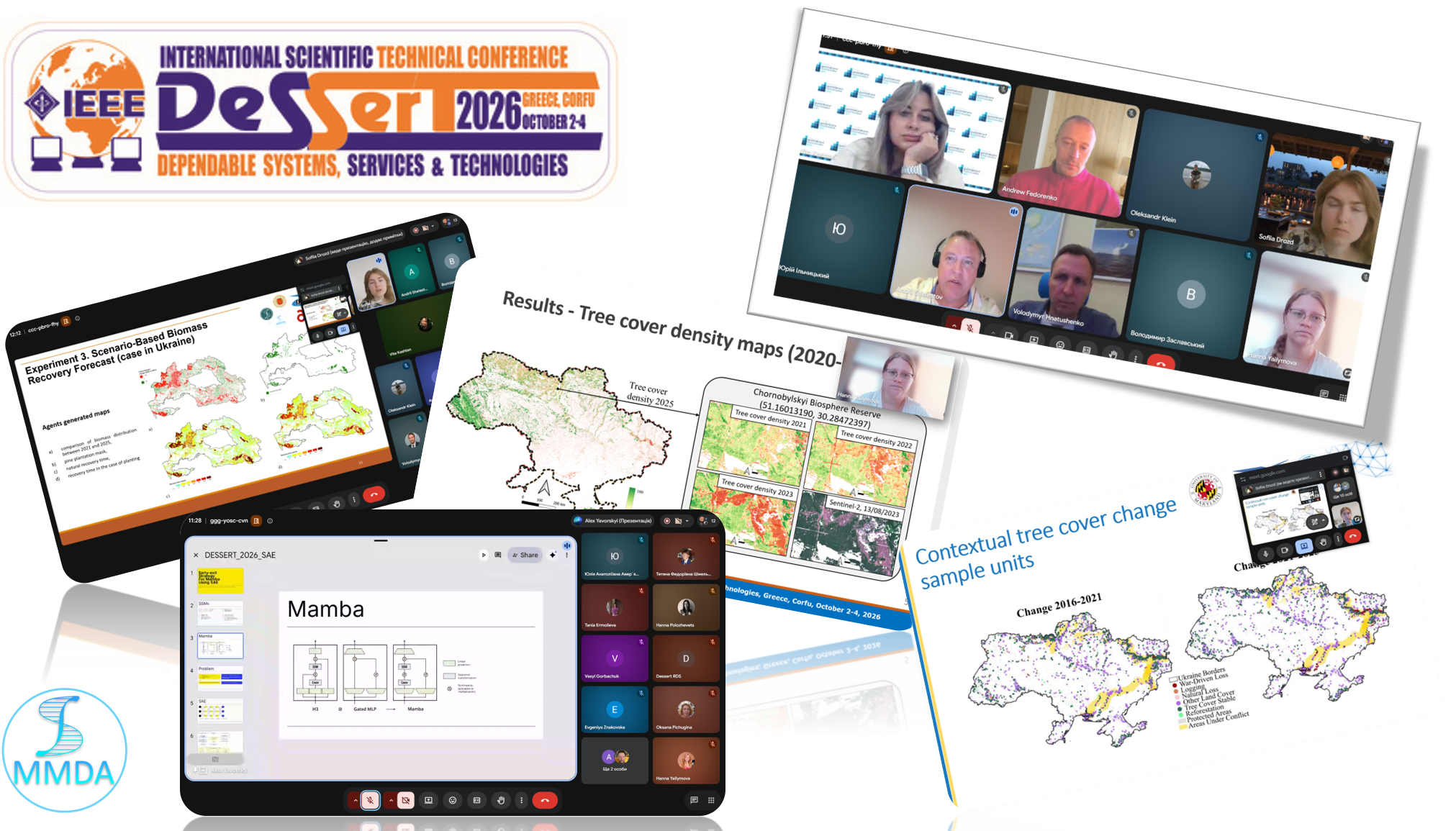
The 16th International Conference on Dependable Systems, Services and Technologies (DESSERT’2026) took place in a hybrid format in Corfu, Greece, from October 2 to 4, 2026, featuring the presentation of 135 papers.
Our research findings were also presented during the session titled “Earth Intelligence for Safe and Resilient Recovery of Ukraine,” which was initiated, organized, co-chaired, and moderated by Prof. Andrii Shelestov and Prof. Nataliia Kussul:
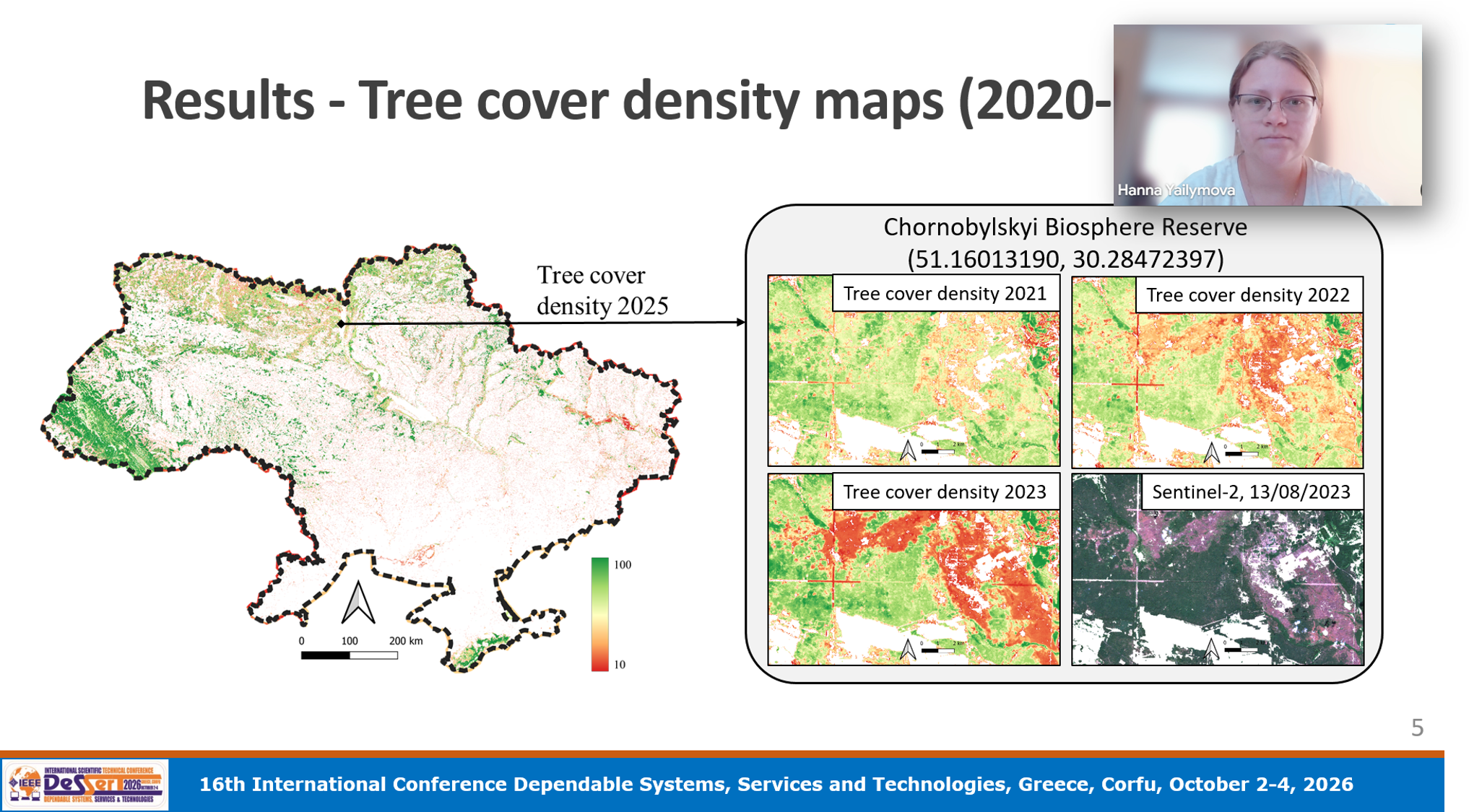
Associate Professor Hanna Yailymova presented the study “Annual Tree Canopy Cover Mapping Using GEDI and Multi-Source Satellite Embeddings: A Case Study for Ukraine” (authors: Bohdan Yailymov, Hanna Yailymova, Oleh Chaskovskyy, Oleksandr Matushevskyi, Andrii Shelestov, Nataliia Kussul, Svitlana Nosok, Mykhailo Kolomytsev). This work focused on the annual mapping of Ukraine’s tree canopy cover using GEDI data, multi-source satellite data, and machine learning methods.
PhD student Sofiia Drozd presented three papers.
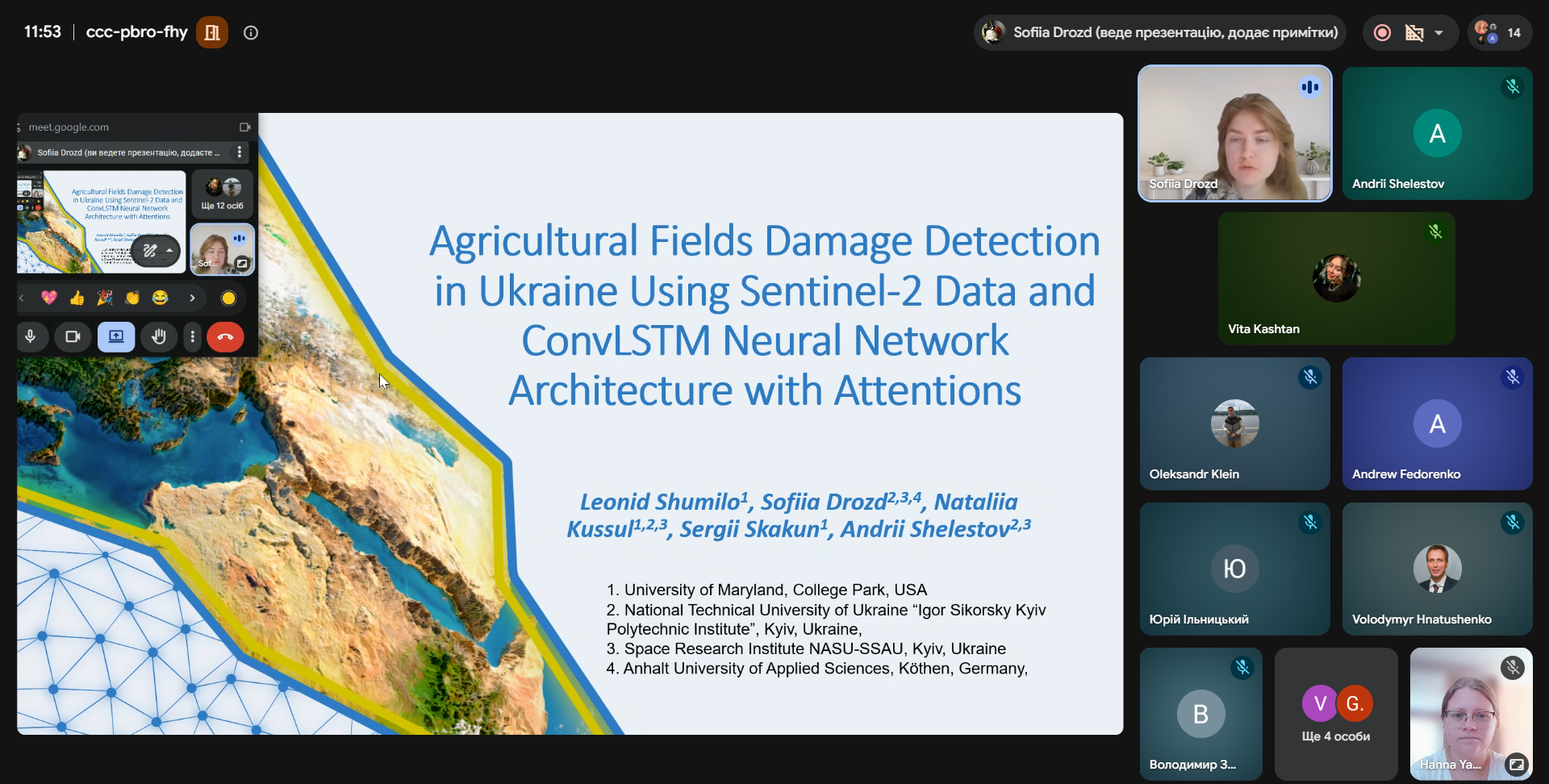
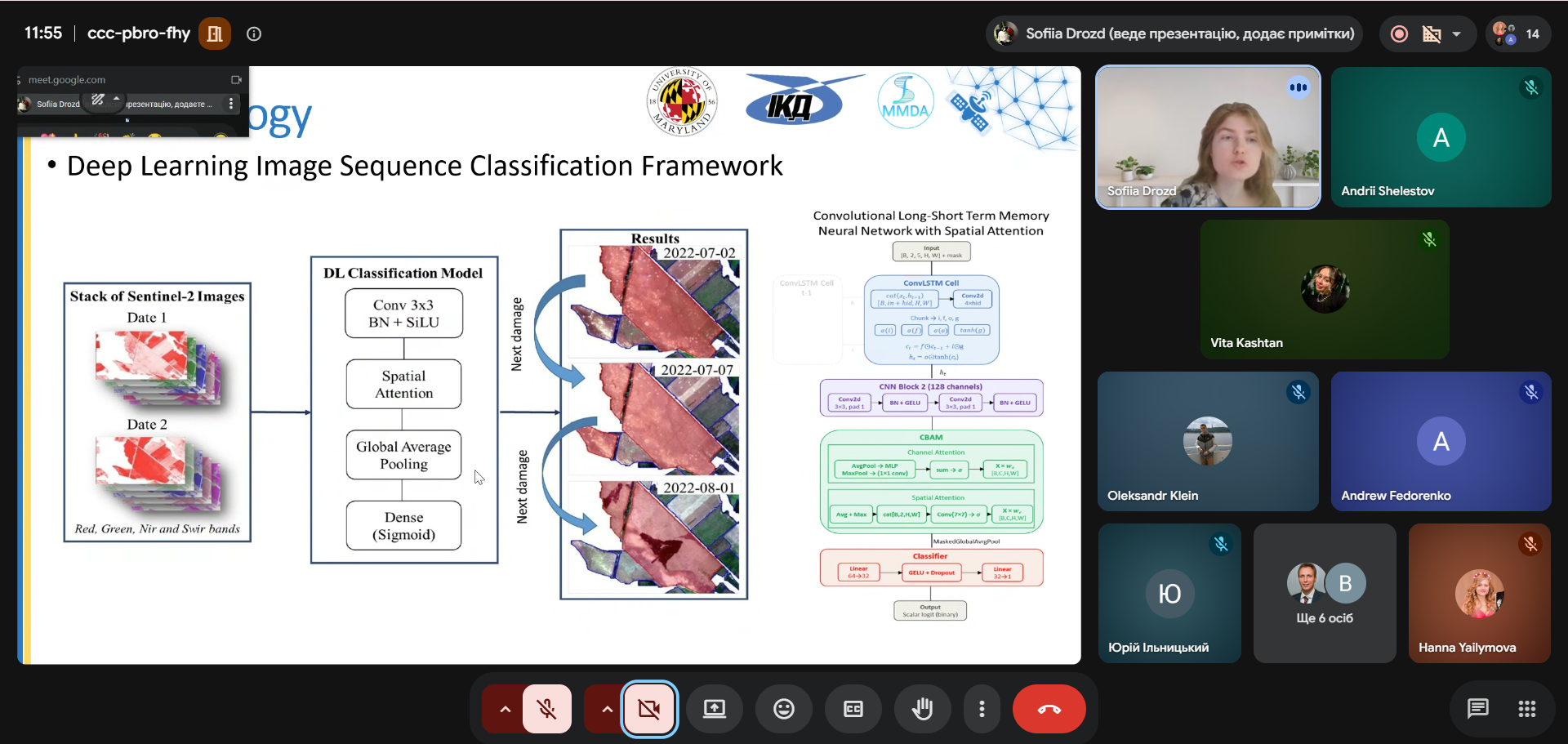
The study “Agricultural Fields Damage Detection in Ukraine Using Sentinel-2 Data and ConvLSTM Neural Network Architecture with Attentions” (authors: Leonid Shumilo, Sofiia Drozd, Nataliia Kussul, Sergii Skakun, Andrii Shelestov) focused on detecting damage to agricultural fields in Ukraine using Sentinel-2 satellite data and advanced deep learning methods.
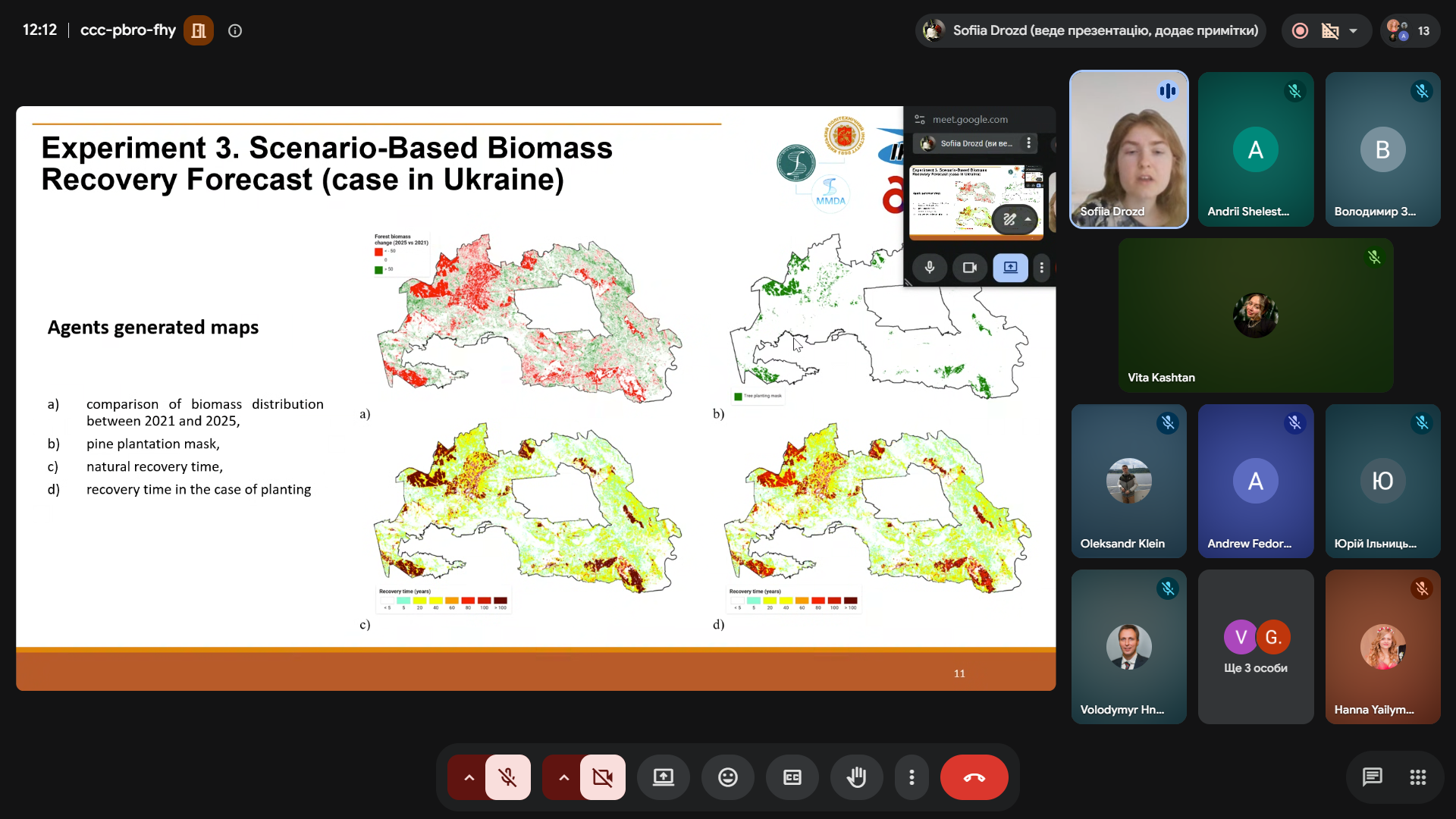
The paper “Multi-Agent Framework for Scenario-Based Geospatial Modeling of Forest Biomass Dynamics under Natural and Anthropogenic Disturbances” (authors: Sofiia Drozd, Nataliia Kussul, Andrii Shelestov) focuses on applying a multi-agent approach to the geospatial modeling of forest biomass dynamics under various natural and anthropogenic impacts.
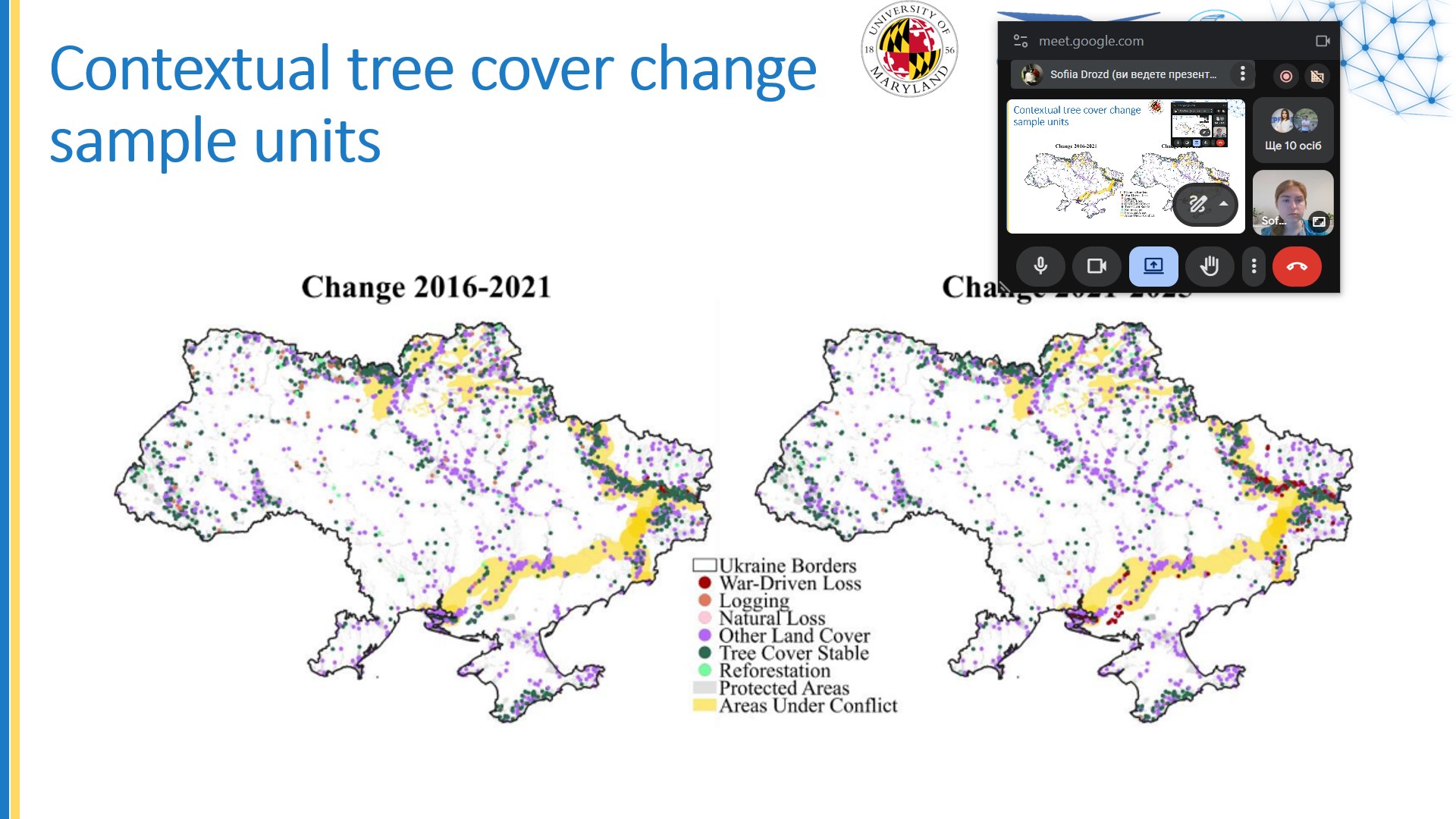
The study “From Land Cover Change to Geospatial Context: Assessment of Tree Cover Loss Statistics in Ukrainian Protected Areas During Russian Aggression from 2016 to 2025” (authors: Leonid Shumilo, Sofiia Drozd, Nataliia Kussul, Andrii Shelestov) centers on assessing tree cover loss within Ukraine’s nature reserve fund areas during the 2016–2025 period.
In addition to the research presented by the MMDA Department, the session brought together works focused on Ukraine’s recovery and development—ranging from the detection of solar panels and the analysis of vulnerability interconnections to the creation of a digital twin for climate risk assessment.
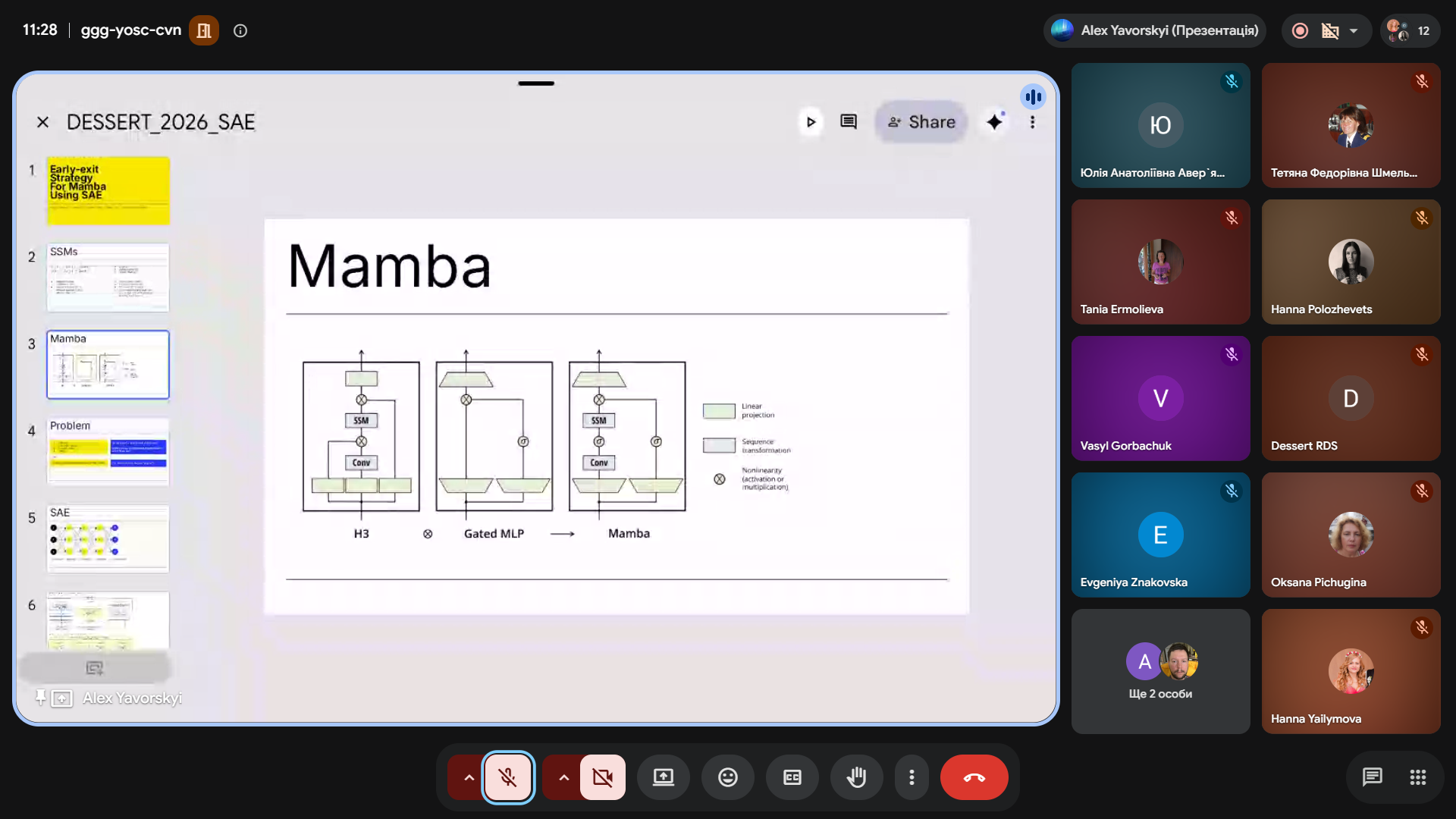
PhD students from the department also presented at other sessions of the conference. In particular, Oleksandr Yavorskyi presented the paper “Early-Exit Detection of Divergent Behavior for MambaTS with Sparse Autoencoders” (authors: Oleksandr Yavorskyi, Andrii Shelestov, Emma Brodina, Hanna Yailymova) during the “Computational Intelligence, Formal Methods, and Resilient Decision Systems” session, which was moderated by Hanna Yailymova (Associate Professor at the MMAD Department) and Volodymyr Zaslavskyi (Professor at Taras Shevchenko National University of Kyiv).
PhD student Anton Cherniatevych presented the paper “Hybrid-Deterministic Fallback for Dependable LLM Provider Composition” (Anton Cherniatevych, Sofiia Drozd, Nataliia Kussul, Andrii Shelestov, Gregory Giuliani, Charlotte Poussin) at the workshop “Autonomous Platforms, Intelligent Applications and Human-Centred AI, Computer Vision, Remote Sensing and Intelligent Monitoring,” moderated by Sofiia Drozd (PhD student at the MMAD Department).
Such international scientific forums demonstrate how Earth Observation, artificial intelligence, geospatial modeling, and digital technologies can be applied to address practical challenges related to Ukraine’s recovery.